My sister raised me after our mom left. I was 12, she was 19. She became a nurse, I became a doctor, and somewhere between my residency and her double shifts, I stopped calling. At graduation, I told the crowd I’d “climbed the ladder on my own.” She was in the third row. She left before I finished the sentence.
For three months she didn’t answer my calls. I told myself she was busy, that nurses work holidays, that I’d try again next week.
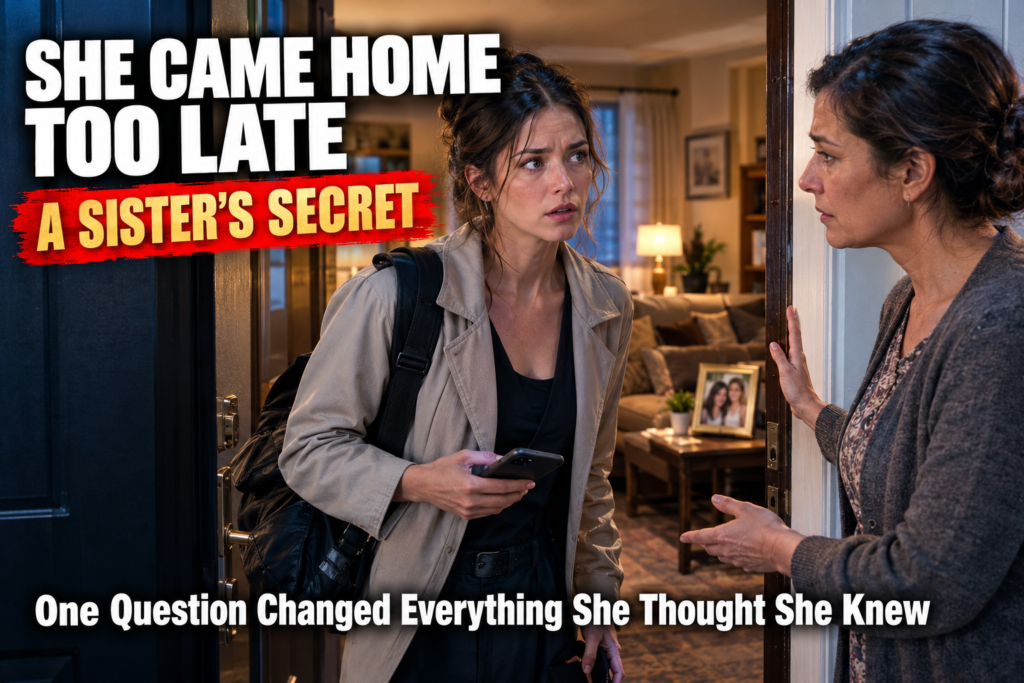
Last Tuesday I flew back for the first time in two years and drove straight to her apartment. Her neighbor answered the door instead, looked at me for a long moment, and asked quietly if I was “the sister from the hospital records.”
I didn’t understand the question until she stepped aside to let me in.
Part 1
When our mother left, I was twelve years old, and my sister Sarah was nineteen.
I remember the sound of the front door closing more clearly than I remember our mother’s face that morning. The door didn’t slam. It closed gently, almost politely, as if she were stepping out to buy groceries and would be back before dinner.
But the groceries never came.
Neither did she.
I stood in the hallway wearing one sock, clutching the strap of my schoolbag, while Sarah stared at the door. She had been making toast in the kitchen. I could still smell the burnt edges, and the kettle was whistling behind us.
“Sarah?” I whispered.
She didn’t answer.
“Where’s Mom going?”
My sister slowly turned toward me. Her face looked strange, as though someone had erased every expression she knew how to make.
“Come here, sweetheart.”
I went to her because she was the only person left in the house who might know what was happening.
She knelt in front of me and wrapped her arms around my shoulders. Her hands were trembling.
“Is she coming back?” I asked.
Sarah held me tighter.
“I don’t know,” she admitted.
It was the first time I had heard my sister say she didn’t know something. Sarah had always seemed certain about everything. She knew how to fix the washing machine when it stopped spinning, how to stretch our grocery money until payday, and how to make our mother laugh when she came home exhausted from work.
But that morning, she had no answer.
I began crying against her shoulder. She let me cry until I had nothing left, then wiped my face with the sleeve of her sweatshirt.
“Listen to me,” she said, holding my cheeks between her palms. “You still have me. Do you understand? You have me.”
I nodded because I wanted to believe her.
At nineteen, Sarah should have been worrying about college, friendships, dating, and the thousand ordinary things young women worry about when they first step into adulthood. Instead, she spent the next several weeks learning how to become a parent without anyone teaching her how.
She called relatives. She searched through paperwork. She tried to reach our mother. She sat on hold with offices that transferred her from one department to another, explaining repeatedly that she was nineteen, that our mother was gone, and that her little sister still needed someone to take care of her.
Some relatives offered sympathy. Others offered advice.
“You’re too young to take on this responsibility,” one aunt told her over the telephone.
Sarah stood by the kitchen window, gripping the receiver.
“She’s my sister.”
“That doesn’t mean you should sacrifice your entire future.”
Sarah looked through the glass at me sitting at the kitchen table, pretending to do homework while listening to every word.
“What future do you think I have if I leave her, too?”
The aunt had no answer.
Sarah found work, adjusted her plans, and learned to live on a budget so tight that she sometimes skipped meals without telling me. When I asked why she wasn’t eating, she would smile and claim she’d already had something at work.
I believed her.
Children believe the people who keep them safe.
For the first few months, I still expected our mother to return. I listened for footsteps in the hallway. Whenever a car stopped outside, I glanced toward the window. On birthdays and holidays, I wondered whether a card might arrive.
Sarah never told me to stop hoping.
She simply made sure there was always a cake on my birthday, a warm coat in winter, and someone waiting when I came home from school.
She became the person who signed permission slips, attended parent meetings, and sat beside my bed when nightmares woke me in the middle of the night.
She was my sister, but gradually, she became something larger.
She became home.
Years later, when people asked about my childhood, I would tell them that Sarah had raised me. I would say it with pride, at least at first. I knew what she had given up, and I knew how much I owed her.
What I didn’t understand was that gratitude could quietly become something else.
As I grew older, I began to see Sarah’s sacrifices as part of the background of my life, like the electricity that kept the lights on or the roof that kept the rain out. I knew those things mattered, but because they were always there, I stopped noticing the effort required to keep them.
And Sarah, who had spent years making sure I never felt abandoned, became the one person I assumed would always understand when I was too busy to call.
I didn’t know that the first time I forgot to call her back would eventually become a habit.
I certainly didn’t know that one day, standing outside her apartment, I would wish more than anything that I could return to the girl who still understood what it meant to need her sister.
Part 2
By the time I turned eighteen, I had developed a plan for my life.
I would become a doctor.
The idea began when I was fourteen, after Sarah brought me to the hospital where she worked. She had been unable to find anyone to watch me that afternoon, so I sat in a quiet corner of the staff room with a borrowed textbook while she finished her shift.
I remember the hospital’s bright corridors, the squeak of shoes against polished floors, and the way everyone seemed to be moving with purpose. Nurses hurried between rooms. Doctors studied charts. Families waited anxiously for news.
Sarah moved through all of it as if she belonged there.
A woman stopped her in the corridor and thanked her for helping her husband through a difficult night. Sarah listened, smiled, and gently touched the woman’s arm.
“He’s a fighter,” she said. “You both are.”
When the woman walked away, I looked at my sister differently.
“You’re good at this,” I told her.
She raised an eyebrow. “At what?”
“Being a nurse.”
Her expression softened.
“I try.”
“I want to do something like that.”
“You want to become a nurse?”
I shook my head.
“A doctor.”
Sarah laughed, but not at me. It was a warm, delighted laugh, the kind she had used when I was little and announced that I would one day own a house with twelve bedrooms and a swimming pool.
“A doctor, huh?”
“The best one.”
She crouched beside my chair.
“Then you have to study harder than you ever have before.”
“I will.”
“And when it gets difficult?”
“I’ll keep going.”
She held out her little finger.
“Promise?”
I hooked mine around hers.
“Promise.”
From that day forward, Sarah treated my ambition as something real. She found used textbooks, helped me organize my study schedule, and encouraged me to apply for scholarships. When I doubted myself, she reminded me of the promise I had made in the hospital.
She worked double shifts whenever she could get them. Sometimes she came home long after midnight, her feet swollen and her eyes heavy with exhaustion. Even then, she would peek into my room to see whether I was studying.
“Go to sleep,” I would tell her. “You look exhausted.”
“So do you.”
“I’m studying.”
“And I’m checking on my future doctor.”
She would smile and close the door halfway, leaving a thin strip of hallway light across my floor.
I passed my exams. I earned scholarships. I was accepted into medical school.
When the acceptance letter arrived, Sarah was standing at the sink washing dishes. I ran into the kitchen waving the envelope so wildly that I nearly knocked over a glass.
“I got in!”
She turned off the tap.
“What?”
“Medical school! Sarah, I got in!”
For one second, she simply stared at me.
Then she began to cry.
I had seen Sarah tired, frustrated, worried, and angry. I had seen her force herself to smile when the bills were overdue. But I had rarely seen her cry from happiness.
She dried her hands on a towel and pulled me into her arms.
“You did it,” she whispered.
“We did it.”
She leaned back to look at me.
“No, sweetheart. You did the studying. You took the exams. You earned this.”
“But you—”
“I just made sure you had a chance.”
At the time, I understood that as humility. Sarah was the kind of person who never wanted credit for anything. She could work a twelve-hour shift, come home to cook dinner, and still tell me that I was the one doing something impressive.
I promised myself I would repay her someday.
When I became a doctor, I would buy her a beautiful house. I would make sure she never had to work another double shift. I would take her on a vacation somewhere warm, where she could sleep late and forget what it felt like to be exhausted.
I imagined telling everyone how she had raised me.
I imagined standing beside her, watching her smile while people applauded the woman who had made my success possible.
But medical school introduced me to a world where achievement was measured in grades, awards, competitive placements, and the names of prestigious institutions.
I learned to describe myself through my accomplishments.
My scholarship became proof of my determination. My exam results became evidence of my intelligence. My admission to a competitive residency became the story I told whenever someone asked how I had reached that point.
Sarah remained in the story, but she slowly moved toward the edges.
I called her after major exams. I sent messages when I had time. Whenever she asked how I was doing, I gave her the exciting details first and promised to explain the rest later.
She always listened.
“Have you been eating properly?” she would ask.
“Yes.”
“Sleeping?”
“Whenever I can.”
“Are you taking care of yourself?”
“Sarah, I’m fine.”
She would pause, then ask whether I needed anything.
I rarely asked whether she did.
The truth was that I loved my sister. I had never stopped loving her. But love, when it is not accompanied by attention, can become a word people use to reassure themselves while someone else quietly waits.
And as the years passed, Sarah waited more often than I realized.
Part 3
Residency was the beginning of the distance I pretended not to notice.
The hospital where I trained demanded everything. There were overnight shifts, complicated cases, exhausted supervisors, and patients whose lives could change in a matter of minutes. I learned to drink coffee without tasting it and to sleep whenever I could find a quiet place.
I also learned how easy it was to postpone a telephone call.
Sarah called one evening while I was reviewing patient notes.
Her name appeared on my screen, and I smiled automatically. I wanted to answer. I wanted to hear her voice and tell her about the difficult case I had handled that afternoon.
Then my supervisor called my name.
I silenced the phone.
I would call her back after work.
After work, there was paperwork. After the paperwork, a colleague asked me to review a case. By the time I reached my apartment, I was too tired to think clearly.
I saw Sarah’s missed call while brushing my teeth.
Tomorrow, I told myself.
Tomorrow became three days.
When I finally called, she answered on the second ring.
“Hey, stranger.”
There was no accusation in her voice. That somehow made it worse.
“I’m sorry. It’s been crazy here.”
“I figured.”
“How are you?”
“Good. Busy.”
“What are you doing?”
“Nothing exciting. Work, home, work again.”
I laughed.
“Sounds like your life hasn’t changed.”
“Not much.”
I heard something in her voice that I couldn’t identify. It might have been disappointment, or perhaps I was only hearing the guilt I had carried into the conversation.
“How was your shift?” I asked.
“Long.”
“Did something happen?”
“Just a difficult day.”
I waited for her to explain, but she didn’t.
A message appeared on my computer. My supervisor needed a report before morning, and I still had reading to finish.
“Listen, Sarah, I should get back to this. Can I call you tomorrow?”
“Of course.”
“I promise.”
“Okay.”
We said goodbye.
I did not call the next day.
When Sarah tried again, I sent a text explaining that I was on duty. The following week, I answered briefly while walking between departments. Sometimes I forgot to respond altogether.
She never demanded an explanation.
That silence allowed me to believe I wasn’t hurting her.
I told myself she understood the demands of my career because she worked in a hospital, too. She knew what long shifts felt like. She knew what exhaustion could do to a person’s concentration. Surely she understood that I wasn’t ignoring her on purpose.
What I failed to understand was that knowing why someone is absent doesn’t make their absence hurt less.
Sarah had spent years teaching me that people could depend on one another. Now I was teaching her that even the person she had sacrificed everything for might not have time to listen.
I didn’t see it that way.
I saw a young doctor trying to survive residency.
I saw deadlines, exams, and opportunities I couldn’t afford to miss. I saw classmates who seemed to be moving ahead faster than I was and mentors who warned us that a single mistake could damage our futures.
Whenever guilt surfaced, I pushed it aside by reminding myself that all of this was temporary.
Once residency ended, things would settle down.
Once I had a permanent position, I would visit more often.
Once I had enough money, I would give Sarah the life she deserved.
There was always another milestone waiting to make me a better sister later.
Then came the graduation ceremony.
It was supposed to be one of the happiest days of my life. My name would be called, I would receive my diploma, and I would finally be able to say that the dream I had made at fourteen had come true.
Sarah had told me she would be there.
“I wouldn’t miss it,” she said when I invited her.
I was relieved. I had been so busy organizing the ceremony, choosing my outfit, and preparing for photographs that I had barely considered what the day meant to her.
She had been waiting for this moment since the night she watched me open my medical school acceptance letter.
I knew she would be proud.
I also knew that everyone else would be watching.
My classmates would be there with their families. Professors would be seated near the front. Photographers would capture the graduates receiving their diplomas.
For weeks, I had imagined what I would say if I were given the opportunity to address the crowd.
I wanted to sound confident. Independent. Accomplished.
I wanted the people in that room to believe I had earned my place through determination and hard work.
I never asked myself why acknowledging Sarah’s sacrifices seemed, in my mind, to take something away from my achievements.
On the morning of the ceremony, she sent me a message.
*I’m so proud of you. Today is your day, sweetheart.*
I read it while getting ready.
I meant to answer with something meaningful. Instead, I sent a heart and hurried out the door.
Sarah had spent nineteen years becoming the person I could depend on.
I was about to stand in front of a crowd and tell them I had climbed the ladder on my own.
And I still had no idea what that sentence would cost us.
Part 4
The graduation hall was filled with flowers, camera flashes, and the sound of families calling out names.
I remember looking across the audience before the ceremony began. Parents leaned toward one another, adjusting collars and smoothing dresses. Younger siblings waved from their seats. A little boy in the front row held a bouquet so large that he could barely see over it.
Then I saw Sarah.
She was sitting in the third row, wearing a simple dark blue dress. Her hair was neatly arranged, and she held a small bouquet in her lap. She looked tired, but when our eyes met, her face lit up.
She waved.
I waved back.
For a moment, the noise around me faded. I saw the nineteen-year-old who had knelt in our hallway and promised I would never be alone. I remembered the nights she had stayed awake while I studied, the meals she had prepared, and the times she told me not to worry about money because everything was fine.
I remembered her standing at the kitchen sink, crying over my acceptance letter.
Then someone called my name from backstage, and the moment passed.
The ceremony went on for nearly two hours. We listened to speeches about perseverance, responsibility, and the privilege of caring for others. When my name was announced, the hall erupted in applause.
I walked across the stage, accepted my diploma, and smiled for the cameras.
Sarah stood up.
She clapped harder than anyone around her. I could see tears shining in her eyes, and for one brief second, I wanted to walk down from the stage and hug her.
Instead, I posed for another photograph.
Afterward, one of the faculty members approached me and congratulated me on my academic achievements. He asked whether I would say a few words to the audience about my journey.
I agreed.
It was an opportunity to present myself as the kind of doctor I wanted everyone to see: determined, resilient, and self-made.
I stood at the microphone and looked out over the crowd.
“I’ve learned that success comes from discipline,” I began. “There were times when the road seemed impossible, when I was exhausted and uncertain whether I could keep going. But I never stopped believing that hard work would get me where I wanted to be.”
People nodded.
I continued, speaking about late nights, difficult exams, and the sacrifices I had made to reach graduation.
Most of what I said was true.
I had worked hard. I had missed sleep, struggled through difficult rotations, and questioned myself more times than I could count. I had earned my degree through years of effort.
But the truth I left out was the one that mattered most.
“I’ve climbed the ladder on my own,” I said.
The words came out smoothly.
I heard applause from the audience.
Then I looked toward the third row.
Sarah was no longer smiling.
She hadn’t stood up. She hadn’t made a scene. She simply lowered her hands into her lap and looked at me with an expression I couldn’t understand.
For a second, our eyes met.
I could have stopped speaking.
I could have corrected myself. I could have told the room about the nineteen-year-old girl who had become a parent before she had the chance to decide what kind of adult she wanted to be. I could have told them about the nurse who worked double shifts so I could study, the sister who kept food on the table, and the woman who had carried my future while quietly putting pieces of her own life aside.
Instead, I turned back toward the audience.
I thanked my professors.
I thanked the hospital staff who had trained me.
I thanked the people who had believed in my potential.
I did not thank Sarah.
When the applause ended, I stepped away from the microphone, convinced that the worst thing I had done was leave someone out of a speech.
I didn’t realize that I had repeated the very thing that had hurt her most: I had accepted everything she gave me, then told the world I had done it alone.
After the ceremony, graduates gathered with their families for photographs.
I was surrounded by classmates congratulating me and relatives asking about my future plans. Someone handed me a bouquet. Another person asked me to stand near the university banner for a picture.
I looked around for Sarah.
She was near the exit, holding her purse and the small bouquet she had brought for me.
“Sarah!” I called.
She turned.
I hurried toward her, smiling as though nothing had happened.
“Where are you going? We haven’t taken our picture.”
She looked at me for a long moment.
“You look happy,” she said.
“I am. Are you okay?”
“Of course.”
Her answer came too quickly.
“Come on,” I said, reaching for her arm. “Let’s get a picture together.”
She stepped back.
“I need to go.”
“Now? But we just finished.”
“I have work tomorrow.”
“You could stay for dinner.”
Sarah’s eyes dropped briefly to the bouquet in her hands.
“I don’t think so.”
I stared at her, confused by the sudden distance.
“Did I do something?”
Her expression changed, and for the first time that afternoon, I saw the hurt beneath her calm voice.
“You really don’t know?”
Before I could answer, she turned and walked toward the doors.
I watched her leave, still holding my diploma, surrounded by people who were congratulating me on becoming a doctor.
I had spent years working toward that moment.
It was the first time I understood that achieving a dream could also mean losing sight of the person who helped make it possible.
And as the doors closed behind my sister, I told myself I would call her that evening.
I didn’t.
Part 5
The first week after graduation, I called Sarah three times.
The first call went unanswered.
The second went straight to voicemail.
On the third, I left a message.
“Hey, Sarah. It’s me. I know you’re busy, but I wanted to see how you were doing. I’m sorry we didn’t get to celebrate properly. Call me when you can.”
I listened to the message before sending it, satisfied that I sounded warm and concerned.
I did not mention the speech.
I did not mention the look on her face when I said I had climbed the ladder on my own.
I didn’t mention the question she had asked before walking away.
I wanted the discomfort to disappear without requiring me to examine it too closely.
When she didn’t respond, I told myself she needed time to rest after her shifts.
Sarah had always been busy. She was a nurse, and nurses worked weekends, holidays, and nights when other people were asleep. It wasn’t unusual for her to take a while to return a call.
I knew that.
I also knew she had never gone three months without answering me before.
At first, I felt annoyed.
I was starting a new chapter of my life. I had earned my medical degree and was preparing for the next stage of my career. I had paperwork to complete, professional arrangements to make, and people to meet.
Surely my sister could find a few minutes to call me back.
Then the annoyance turned into worry.
I sent her a message asking whether she was all right. I called again and left another voicemail. I tried contacting her after work, then on a weekend, then at a time when I thought she might be home.
Nothing.
I began checking my phone more frequently than I wanted to admit.
Every time a notification appeared, I hoped it would be her name.
It never was.
I could have driven to her apartment. I could have asked one of her colleagues whether she was okay. I could have taken a day off and gone to see her.
Instead, I kept looking for explanations that allowed me to stay where I was.
Maybe she was working extra shifts.
Maybe she was upset about something unrelated.
Maybe she wanted me to understand how difficult it was to be ignored.
That last possibility bothered me, so I pushed it aside.
I wasn’t deliberately ignoring her, I reminded myself. My schedule had been demanding. I had been tired. I had been trying to build a future.
I had reasons.
But whenever I thought about the graduation ceremony, I remembered Sarah’s face.
I remembered the way her hands had lowered into her lap.
I remembered her quiet question.
*You really don’t know?*
I knew enough to feel guilty. I simply didn’t want to know enough to change.
My friends celebrated my graduation. They congratulated me on completing a demanding course of study and asked what I planned to do next. I answered confidently, describing the career I had worked so hard to build.
When someone asked whether my family was proud, I smiled.
“My sister helped raise me,” I said.
It sounded generous. It sounded appreciative.
But I rarely explained what that sentence meant.
I didn’t tell them how young Sarah had been when our mother left. I didn’t tell them about the bills, the double shifts, or the nights she had gone without sleep so I could finish my schoolwork. I didn’t explain that she had become both my safety net and my family long before either of us understood what that responsibility would cost her.
I had turned her sacrifices into a convenient line in my biography.
A fact about my past.
Something I could mention when it made me seem grateful without allowing it to interrupt the story I preferred to tell about myself.
By the second month, I stopped leaving voicemails.
I told myself I was giving her space.
I still thought about her every day. Sometimes I would see something in a shop window that reminded me of her. Sometimes I would hear a song she liked. Sometimes I would wake in the middle of the night remembering a conversation we had shared years earlier.
I would pick up my phone, open her contact, and stare at the screen.
Then I would lock it and put it down.
I kept waiting for the right moment.
A quiet weekend.
A day without work.
A time when I could call her without feeling rushed.
I didn’t understand that the right moment had been available all along. It had existed in the minutes between shifts, in the evenings when I had chosen another task over her voice, and in the months when I had assumed she would keep waiting because she always had.
By the end of the third month, I had almost convinced myself that the silence was temporary.
Then, one evening, I found an old photograph of us.
I was twelve, sitting on the kitchen counter with a bowl of cereal. Sarah stood beside me in her nursing uniform, smiling at the camera. Her hair was tied back, and she looked exhausted, though I hadn’t noticed it when the picture was taken.
I turned the photograph over.
On the back, in Sarah’s handwriting, were four words:
*My favorite person, always.*
I sat there holding the picture for a long time.
For the first time, I wondered whether I had been treating her love as something I could spend without ever replenishing it.
The next morning, I booked a flight home.
I didn’t tell myself I would call her next week.
I was going to see my sister.
Part 6
Two years passed before I returned.
That is the part I still struggle to explain.
I had booked the flight after finding the photograph, but my plans had changed. Work became demanding again. One opportunity led to another, and the visit I had promised myself became something I kept postponing.
I sent messages occasionally. I called on birthdays. I tried to convince myself that these small gestures meant I was still present in Sarah’s life.
She rarely responded.
Eventually, I stopped expecting an answer.
I told myself that our relationship had simply changed. People grew older. Siblings developed separate lives. Sometimes distance was a natural consequence of becoming an adult.
Those explanations were comfortable because they made the distance sound inevitable.
They did not require me to admit that I had helped create it.
When I finally booked another flight, it was not because I had suddenly become wiser. It was because I had reached a point where the silence felt heavier than the fear of confronting it.
I arrived on a Tuesday.
The city looked familiar in ways that hurt. The streets seemed smaller than I remembered, and the buildings around our old neighborhood had changed. A café had replaced the shop where Sarah used to buy discounted groceries. The bus stop where she had waited after late shifts had been renovated.
I rented a car and drove straight to her apartment.
During the journey, I rehearsed what I would say.
I would apologize for the graduation speech.
I would explain that I had been proud of my achievements and had allowed that pride to make me selfish.
I would tell her that I had missed her.
I would ask whether we could start again.
The closer I got to her building, the more childish my rehearsed words sounded. They seemed too small for the years that had passed between us.
What could I say to a woman who had spent her youth raising me, only to watch me grow into someone who could barely make time to ask whether she was all right?
I parked outside the apartment building and sat behind the wheel for several minutes.
I remembered the last time I had visited. Sarah had been rushing to prepare dinner while I talked about my plans for medical school. She had listened carefully, asking questions and encouraging me.
I couldn’t remember what I had asked about her life that evening.
I couldn’t remember whether I had asked anything at all.
That realization stayed with me as I climbed the stairs.
Her apartment was on the second floor. I stood outside the door, holding my phone and the small bag I had brought from the airport.
I almost turned around.
Then I knocked.
No answer.
I knocked again, more firmly this time.
Footsteps approached from the apartment next door. A woman opened the door and looked at me with cautious curiosity.
“Can I help you?”
“I’m looking for Sarah,” I said. “She lives here.”
The neighbor’s expression changed.
“Who are you?”
“I’m her sister.”
The woman didn’t respond immediately. She looked at my face, then at the apartment door, then back at me.
Something about her silence made my stomach tighten.
“Is she home?” I asked.
The neighbor took a slow breath.
“You’re her sister?”
“Yes.”
She studied me for a long moment, as though comparing my face with something she had seen before.
Then she asked a question I didn’t understand.
“Are you the sister from the hospital records?”
I stared at her.
“What?”
Her eyes softened, but she did not smile.
“The sister they listed in the hospital records. Are you her?”
I felt the blood drain from my face.
“What hospital records? What are you talking about?”
The neighbor glanced toward Sarah’s door.
“I thought you knew.”
“Knew what?”
She hesitated.
I suddenly became aware of every sound in the hallway: the hum of a distant television, the elevator moving somewhere below us, the faint ticking of a clock behind the neighbor’s door.
My sister had been silent for three months after my graduation. I had spent two years convincing myself that her silence was an ordinary consequence of distance.
Now a stranger was looking at me as if I had arrived too late to understand something important.
“Please,” I said. My voice sounded thin. “Tell me what’s going on.”
The neighbor reached for the door handle of Sarah’s apartment.
“I think you should come inside.”
She opened the door.
And the first thing I noticed was that my sister’s home did not look the way I remembered it.
Part 7
I stepped into the apartment slowly.
For a moment, I couldn’t understand what was wrong. Everything was familiar, but the room felt strangely still. Sarah’s shoes were arranged beside the entrance. A cardigan hung over the back of a chair. There were photographs on the wall, including one of us taken years earlier, when I was still young enough to lean against her shoulder without wondering whether I was taking up too much of her time.
But the apartment did not feel lived in the way I remembered.
The neighbor closed the door behind us.
“What’s your name?” she asked.
I told her.
She nodded as if confirming something.
“My name is Linda. I’ve lived next door to Sarah for six years.”
I looked around again.
“Where is she?”
Linda’s face tightened.
“Please sit down.”
“I don’t want to sit down. I want to know where my sister is.”
Linda pulled out a chair, but I remained standing.
“Is she in the hospital?”
She didn’t answer.
“Is she sick?”
My voice rose sharply on the last word.
Linda looked toward the photographs.
“Sarah talked about you.”
I felt a sudden, irrational burst of anger.
“Then why didn’t she call me?”
The question sounded cruel as soon as it left my mouth.
Linda’s expression changed.
“She did, you know.”
I stared at her.
“What?”
“She talked about calling you. She kept saying she didn’t want to disturb you because you were busy. She was proud of you.”
My throat tightened.
Linda continued carefully, as if she were choosing every word.
“She told me about your graduation. She said you had worked very hard and that she was happy you had achieved your dream.”
I looked down.
“She was upset that day.”
“Yes.”
“Because of what I said.”
Linda didn’t answer immediately.
“She didn’t seem angry,” she said at last. “She seemed hurt.”
I sank into the chair.
For two years, I had imagined Sarah’s silence as a punishment. Some part of me had resented her for refusing to answer, even while another part knew I had given her reasons to be hurt.
I had never imagined what those years might have looked like from her side.
“Where is she?” I asked again, more quietly.
Linda folded her hands.
“I need to explain something to you.”
I looked at her.
“Please.”
She took a breath.
“Sarah spent a long time putting everyone else first. She worked hard. She helped people. She worried about you more than she ever admitted.”
I pressed my fingers against the edge of the table.
“That sounds like her.”
“It does.”
Linda’s eyes moved toward the hallway.
“But there were things she didn’t tell you.”
My stomach tightened.
“What things?”
“She didn’t want you to worry.”
The words were so familiar that they almost made me laugh.
Sarah had used them throughout our childhood. She said them when money was tight, when she was exhausted, when she had to work on a holiday, and when I asked why she sometimes came home looking as though she hadn’t slept.
She had protected me from the truth so often that I had mistaken my ignorance for proof that everything was fine.
Linda stood and walked toward a small shelf near the living room. She picked up a photograph and brought it back.
It showed Sarah standing outside the hospital, wearing her nursing uniform. She was smiling at the camera, one hand raised to shield her eyes from the sun.
I remembered that day.
I had been in medical school, and she had sent me the photograph with a message saying she had finally finished a difficult week.
I had replied with a thumbs-up because I was studying for an exam.
I remembered that, too.
Linda placed the photograph on the table.
“She was so proud of you,” she said.
I could no longer look at the picture.
“Why are you telling me this? Where is she?”
Linda sat down opposite me.
Her next words changed the shape of the room.
“Sarah isn’t here.”
I stared at her.
“What does that mean?”
Linda’s eyes filled with tears.
I stood so quickly that the chair scraped against the floor.
“Where is my sister?”
Linda reached toward me, but I stepped away.
“Please don’t make me guess. Just tell me.”
She swallowed.
“She passed away.”
The words seemed to reach me from a great distance.
I heard them. I understood each word individually. But my mind refused to connect them to Sarah, the person who had promised I would never be alone.
“No,” I whispered.
Linda began to cry.
“I’m so sorry.”
“No. You’re wrong.”
I shook my head.
“She can’t be dead. I just got here. I came to see her.”
Linda covered her mouth.
I looked toward the hallway, expecting Sarah to appear with a tired smile and ask what all the noise was about.
Nothing moved.
I thought of the missed calls, the unanswered messages, and the years I had spent telling myself there would always be another opportunity.
“How?” I asked.
Linda wiped her cheeks.
“I can tell you what I know.”
I sat down again because my legs no longer felt steady.
For the first time since I had entered the apartment, I stopped looking for a way to escape the conversation.
I wanted every detail.
I wanted to know when Sarah had needed someone, who had been beside her, and why I hadn’t known.
Most of all, I wanted to understand how the woman who had spent my entire childhood making sure I was never alone could have reached the end of her life without me beside her.
Linda took my hand.
“There’s something else you need to see.”
She stood and walked toward Sarah’s bedroom.
I followed her, terrified of what I might find.
Part 8
Sarah’s bedroom was neat, almost painfully so.
The bed was made. A pair of slippers rested beside the nightstand. Her nursing uniform hung inside the open wardrobe, and a small lamp stood beside a stack of books.
On the dresser was a framed photograph of us.
I was wearing my graduation gown.
Sarah stood beside me, smiling.
I had forgotten that we had taken that picture before the ceremony began, while we were still standing outside the hall. She had insisted on taking one together because she wanted to remember the day.
I stared at the photograph until the edges blurred.
“She kept it here,” Linda said softly.
I reached for the frame.
My own smile looked bright and confident. Sarah’s looked warm and proud. Nothing in the photograph revealed what would happen later that afternoon, when I stood before the crowd and claimed I had climbed the ladder on my own.
I wanted to reach into the image and pull the words back out of the air.
I wanted to tell Sarah that I had been wrong.
I wanted to ask her to forgive me.
Instead, I stood in her bedroom holding a photograph of a moment I could never change.
Linda opened the top drawer of the dresser.
“She kept important things here.”
Inside were neatly arranged papers, a small notebook, several cards, and a bundle of letters held together with a ribbon.
I recognized the handwriting on the envelopes.
Mine.
They were birthday cards I had sent her over the years. Some were simple, written quickly between shifts. Others were more thoughtful, especially when I was younger and still believed that every promise I made would one day be fulfilled.
Linda lifted the bundle carefully.
“She saved everything you sent her.”
I looked at the cards.
One contained a drawing I had made when I was twelve. Another had a photograph of me in my school uniform. There was a birthday card from medical school with a message about how I would repay her someday.
I had written that I would buy her a house.
I had written that she would never have to work so hard again.
I had written that I would make her proud.
I sat on the edge of the bed.
“Why didn’t she tell me she needed help?”
Linda looked at me with a sadness I could barely bear.
“Did you ask?”
I opened my mouth.
Nothing came out.
She sat beside me.
“Sarah didn’t like asking people for things. She spent her whole life making sure everyone else was all right. When she had a difficult day, she would say she was tired. When something worried her, she would say it wasn’t important.”
I looked at the uniform hanging in the wardrobe.
“She was always like that.”
“Yes.”
Linda paused.
“But she talked about you more than anyone. She worried that you were working too hard. She wanted you to succeed. She didn’t want you to feel guilty about anything.”
I pressed the heel of my hand against my forehead.
“That’s exactly what happened. I was always busy. I thought she understood.”
“She did understand.”
Linda’s answer was gentle, but it hurt more than an accusation.
“Understanding why someone is busy doesn’t mean you stop missing them.”
I began to cry.
I had cried as a child when our mother left. I had cried when I failed an important exam. I had cried once during residency after losing a patient, then wiped my face and returned to work because there was another person waiting for me.
But this was different.
There was no next task that could make the feeling disappear. There was no exam I could study harder for, no shift I could work, and no achievement that could undo what had happened.
I was a doctor.
I had spent years learning how to recognize danger, ask questions, and respond when someone needed help.
Yet I had failed to notice the most important person in my life disappearing from it.
“How long?” I asked.
Linda looked down at her hands.
“How long what?”
“How long has she been gone?”
Linda told me when Sarah had died, but the exact words seemed to dissolve as soon as I heard them. I held on to the fact that the date was in the past, that Sarah’s final days had come and gone, and that I had been somewhere else, living a life I had assumed would always leave room for her.
I had not been there to hear her voice.
I had not held her hand.
I had not told her that I was sorry.
I had not thanked her for the childhood she had given me.
I had not even known that I was running out of time.
Linda placed a small notebook in my hands.
“She wrote things down sometimes,” she said. “I thought you should have it.”
The cover was worn at the edges. Sarah had written her name inside, followed by a few dates and reminders.
I turned the first page.
Her handwriting was familiar: neat, practical, and slightly slanted.
I read the first few lines, then stopped.
My name appeared on the page.
I stared at it, afraid to continue.
Linda stood and gave me some privacy.
I remained on the bed, holding the notebook against my chest.
For years, I had believed that Sarah’s greatest gift was the future she had helped me build.
Now I was beginning to understand that her greatest gift had been the love she gave me while she was still here.
And I had spent too much of that time looking ahead to notice the person beside me.
Part 9
I read Sarah’s notebook slowly.
Some pages contained ordinary reminders: grocery lists, work schedules, and notes about bills. Other pages held small observations about her days, written in the brief, practical sentences I remembered from her messages.
There were references to difficult shifts, meals she planned to make, and errands she needed to complete.
Then I found my name again.
She had written about my graduation.
*She’s finally a doctor. I wish Mom could have seen her. I know how hard she worked, and I am so proud of her.*
I pressed my lips together.
The next line was shorter.
*I hope she knows she never had to prove anything to me.*
I read it twice.
Then I read it again.
Sarah had never needed me to become a doctor to justify what she had done for me. She had never raised me because she expected repayment. She had never worked double shifts because she wanted to be praised in front of a crowd.
She had done those things because I was her little sister.
Because our mother had left, and someone needed to stay.
I turned the page.
There were more entries, some separated by weeks or months. I did not try to read everything at once. Each line seemed to open a door into a life I had failed to ask about.
I saw references to being tired, to missing a day off, and to worrying that I was pushing myself too hard.
Then I found a passage about a phone call.
*I thought about calling her tonight. I don’t want her to feel she has to choose between her work and me. She’s building the life she always wanted.*
My hands began to shake.
I could picture Sarah sitting at the kitchen table, holding her phone and wondering whether to call me. I could imagine her deciding against it because she didn’t want to interrupt my work.
She had spent my childhood protecting me from the fear of being abandoned.
As an adult, she had tried to protect me from the guilt of realizing that I was abandoning her in smaller, quieter ways.
I had never asked what that cost her.
I closed the notebook and held it in my lap.
Linda returned with a glass of water.
“Would you like to know more about what happened?” she asked.
I nodded.
She told me what she knew, carefully separating what she had witnessed from what she had heard. She explained that Sarah had continued working, that she had tried to keep her life orderly, and that there had been times when she seemed more tired than usual.
Linda had been her neighbor, not her doctor. She could not explain every detail, and she did not pretend to know everything Sarah had experienced.
That uncertainty was difficult to accept.
I wanted a clear timeline. I wanted to identify the moment when things changed, the warning I had missed, and the exact day when a telephone call might have made a difference.
But grief does not always provide a neat explanation.
There were things I would never know.
There were conversations I would never have.
There were questions I would never get to ask the person who could answer them.
I sat quietly while Linda spoke.
At one point, she reached into a drawer and brought out a folded sheet of paper.
“Sarah asked me to keep this with her things,” she said. “She told me that if you ever came by, I should make sure you received it.”
I stared at the paper.
“She knew I might come?”
“I think she hoped you would.”
My throat tightened.
I took the letter, but I could not bring myself to open it immediately.
I was afraid of what it might say.
Perhaps she had written that she forgave me. Perhaps she had written that she was disappointed. Perhaps she had written nothing about me at all.
Whatever was inside, it would be the closest thing I had to a conversation with my sister.
I unfolded the paper.
The first words were written in Sarah’s familiar handwriting.
*To my little sister.*
I stopped breathing for a moment.
The room seemed to fall silent around me.
I could hear the faint hum of the refrigerator in the kitchen. Somewhere outside, a car passed along the street. The ordinary world continued as if nothing extraordinary had happened.
I began reading.
Sarah’s letter was not a list of accusations. She did not tell me that I had ruined her life or that I had failed to repay her sacrifices. She wrote about the little girl I had been, the dreams I had carried, and the pride she felt when I finally became a doctor.
She wrote about our mother leaving and how frightened she had been at nineteen.
She admitted that she hadn’t known what she was doing.
She had been scared of making mistakes. She had worried that she couldn’t give me enough. She had sometimes gone to work wondering whether I had eaten breakfast, whether I had remembered my homework, and whether I had cried after she closed the bedroom door.
Then she wrote something that broke me.
She said that raising me had never felt like losing her life.
It had felt like choosing what mattered most.
I lowered the letter, unable to see through my tears.
I had spent years believing that one day I would make Sarah’s sacrifices worthwhile. I had treated my career as the repayment she deserved, as if the degree itself could settle a debt between us.
But she had never considered our relationship a debt.
She had simply loved me.
And now, at last, I was beginning to understand how much I had taken for granted.
There was one final paragraph.
I wiped my eyes and read it again, forcing myself to take in every word.
Sarah had written about the future she hoped I would have. She wanted me to be a good doctor, but she also wanted me to remember that life was not measured only by achievements.
She wanted me to make time for the people I loved.
She wanted me to call when someone crossed my mind.
She wanted me to ask how people were doing and stay long enough to hear the answer.
I held the letter against my chest.
I could not change the past.
I could not return to the graduation hall and speak the words I should have spoken. I could not answer the calls I had ignored or give Sarah back the years when she had needed her little sister to be present.
But I could decide what I would do with the life she had helped me build.
For the first time, I understood that becoming a doctor had never been the final proof of Sarah’s love.
It was simply one part of the life she had hoped I would live.
And I still had a choice about the kind of person I would become.
Part 10
I stayed in Sarah’s apartment long after Linda left me alone.
The afternoon light shifted across the living room floor. I read the letter again, then returned to the notebook and looked through the pages I had not yet examined.
There was no single sentence that could explain everything I felt.
Grief arrived in waves. Sometimes I cried so hard that I had to put the letter down. Sometimes I sat perfectly still, remembering something small: Sarah tying my shoelaces before school, cutting sandwiches into triangles because she knew I liked them that way, or waiting at the kitchen table until I finished my homework.
I remembered the way she would ask whether I had eaten.
I remembered how she always answered the phone when I was frightened.
I remembered her standing in the hospital corridor, telling me that if I wanted to become a doctor, I would have to work harder than I ever had before.
She had believed in me long before I had anything to show for it.
And when I finally achieved the dream we had talked about, I had stood before a crowd and claimed the success as my own.
I could spend the rest of my life punishing myself for that moment. I could replay every missed call and every postponed visit until the memories became unbearable.
But Sarah had not raised me to spend my life trapped in regret.
She had raised me to keep going.
That evening, I walked through the apartment one more time. I straightened a cushion that didn’t need straightening. I touched the back of the chair where her cardigan had hung. I stood in the doorway of her bedroom and looked at the uniform she had worn to care for strangers.
I thought about the people she had helped.
I thought about the patients who might remember her gentle voice, her steady hands, and the way she could make a frightening room feel a little less lonely.
Sarah had been a nurse.
I had become a doctor.
Our professions had been different, but the reason behind them had always been the same: someone needed help, and we wanted to be there.
I had become so focused on proving that I could succeed that I had forgotten what success was supposed to mean.
The next morning, I visited the place where Sarah had been laid to rest.
I brought the small bouquet I had purchased before going to her apartment. It was simple, with flowers in colors she used to choose for our kitchen table.
I stood quietly for a long time.
At first, I couldn’t speak. Every apology I had rehearsed seemed inadequate. There was no sentence that could restore the time we had lost.
Finally, I knelt and placed the flowers beside her name.
“I’m sorry,” I whispered.
The words sounded small against the silence.
“I’m sorry I made you wait. I’m sorry I kept telling myself I would call tomorrow. I’m sorry I stood in front of everyone and forgot to tell them who helped me get there.”
I swallowed hard.
“You deserved to hear me say it. You deserved to know that I remembered everything.”
I touched the edge of the stone.
“I remember now, Sarah.”
I told her about the photograph, the notebook, and the letter. I told her I had read every word, even the ones that hurt. I told her that I wished I had come home sooner.
I wished I had asked more questions.
I wished I had listened longer.
I wished I had understood that the people who love us should not have to disappear before we recognize the space they occupy in our lives.
There was no answer, of course.
Only the wind moving through the trees and the quiet knowledge that the conversation I needed most had become one I would have to carry inside me.
Before leaving, I promised her something.
I would not let her love become a sentimental story I told when it suited me. I would not reduce her life to a sentence about how she had helped me succeed. I would remember her as a young woman who had been frightened and uncertain, who had worked hard, who had made mistakes, and who had chosen to care for a child when the world gave her every reason to be afraid.
I would remember the sister who became my family when ours fell apart.
I would tell the truth about how I got here.
When I returned to work, I began making changes that seemed small to other people but felt enormous to me.
I stopped treating every unanswered message as something I could deal with later. When someone I loved crossed my mind, I reached out. When a friend called to talk, I tried not to spend the conversation glancing at my screen. When colleagues asked how I had become a doctor, I stopped telling the story as if determination alone had carried me through.
I told them about Sarah.
I told them that when our mother left, my sister was nineteen and I was twelve. I told them she worked as a nurse, that she supported me while I studied, and that she believed I could become a doctor before I believed it myself.
I told them that I had not always been the sister she deserved.
That part was difficult.
It would have been easier to tell a polished story about sacrifice and success, one in which everyone made the right choices and the ending arrived exactly when it should.
But Sarah’s life deserved honesty, not a performance.
Sometimes, when I finish a long shift, I still reach for my phone to call her. For a fraction of a second, I forget that she is gone. I imagine hearing her familiar greeting and telling her about the day.
Then the truth returns.
I cannot call Sarah anymore.
I cannot ask whether she has eaten or tell her that I’m exhausted. I cannot visit her apartment and find her waiting with a cup of tea. I cannot go back to the graduation ceremony and stand beside her while the crowd applauds.
Those moments are gone.
But the lessons she gave me remain.
When I was twelve, Sarah promised that I would always have her.
She kept that promise in every way she knew how. She gave me a home, protected my childhood, encouraged my dreams, and loved me through the years when I was too young to understand what she was giving up.
I failed to recognize how much she needed me to show up for her, too.
I cannot change that now.
What I can do is live differently because I finally understand it.
I can make time.
I can listen.
I can say thank you while the person who deserves to hear it is still standing in front of me.
And whenever someone asks how I became a doctor, I tell them the truth.
I did not climb the ladder on my own.
My sister held it steady while I learned how to climb.
She was there before the world knew my name, before I had a degree, and before I had any reason to believe I could become the person I am today.
She gave me the chance to build a life.
The least I can do is remember whose hands helped me build it.